You, Me, Community: Using Time as a Storytelling Device
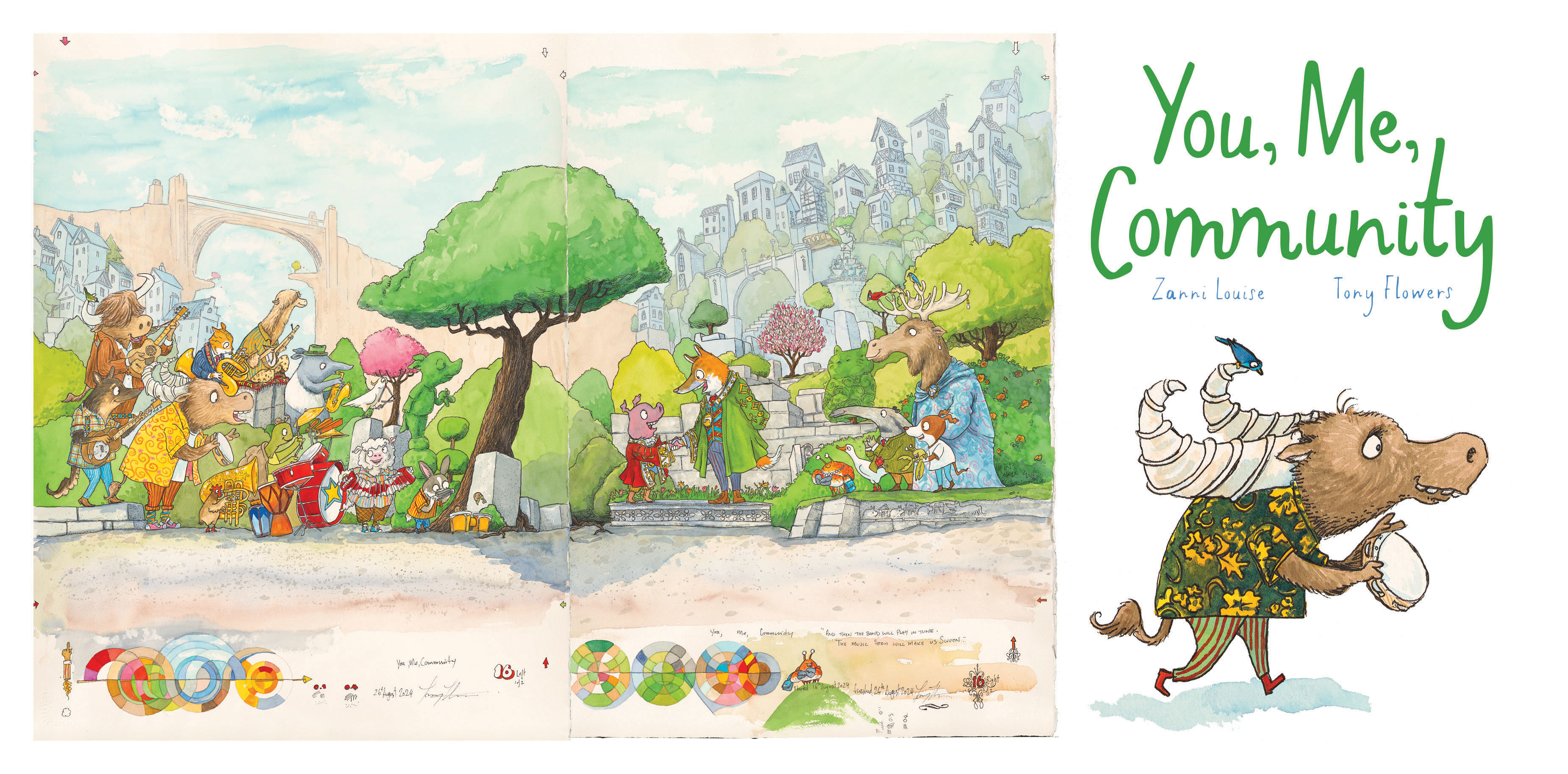
One of the quiet joys of illustrating You, Me, Community was finding ways to show the passing of time without ever needing the text to say it. Picture books rarely mention seasons, weather, or time of day directly, yet these elements can become some of the most powerful storytelling tools an illustrator has. In this book, the passing of seasons is not just illustrative folly, it is device that always me to show that building a community takes sustained effort without being didactic. The readers feel the rhythm of the community and the slow, steady progress of a goal to build a bridge to unit them.
The Bridge as a Symbol of Time and Togetherness
Throughout the story, the bridge becomes a visual symbol of community. We see it in different stages, the second spread feature the gap between the cliff faces, characters in hall discuss and planned the bridge, progress of constructure weaves throughout the pages, and finally a unique version of the bridge is completed. It’s a structure that doesn’t appear overnight. It takes time, effort, and collaboration. By showing the bridge across different seasons, readers can feel the long arc of the community’s journey.
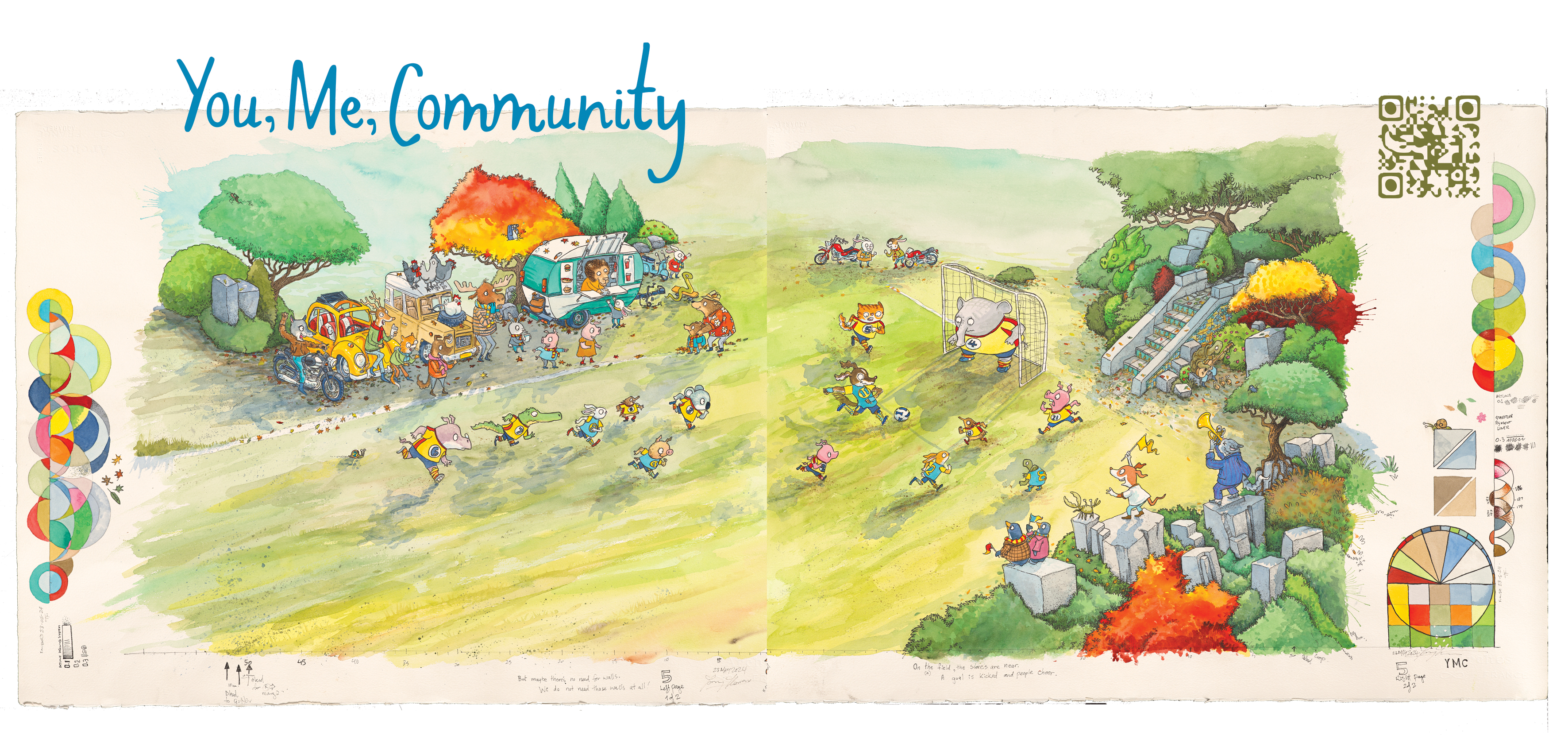
We start with summer and optimistic look at the world, anything is possible, Autumn not only adds warmth to the images, change from planning to construction. We see the leave thin and fall as Winter brings problems to over come,
“… And if we sometimes disagree with members of community, we take a breath. Communicate. We listen, think, negotiate” – Zanni Louise, You Me Community (2026)
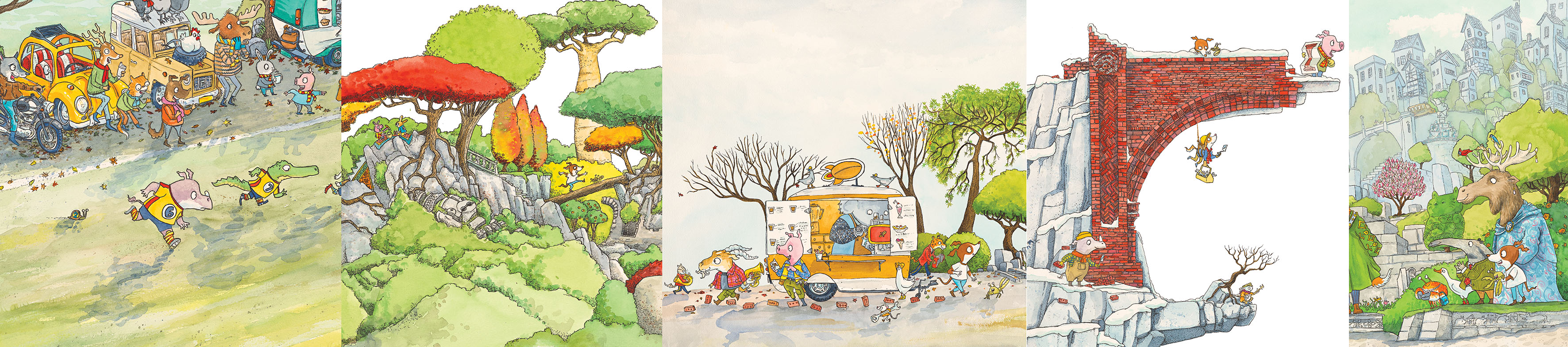
And as problems are overcome, the blossoms Spring bring new optimism and completion of the bridge and the community is united. A visual crescendo.
The text doesn’t spell any of this out, but the illustrations do. Time becomes a character in the story, shaping mood, pacing, and emotional resonance.
Why Illustrators Need to Think About Time
When you’re illustrating a story, one of the first questions to ask is: How long does this story take? Is it a moment? A day? A year? Several decades?
Once you understand the timeframe, you can start to use time as a narrative device. Morning light feels hopeful. Night can feel mysterious or lonely. A long shadow can add drama or tension. Weather can become a challenge for characters to overcome. Seasonal change can show growth, transformation, or the passing of important milestones.
Personally, I’m a big fan of long shadows, pink‑and‑orange skies, and characters lit by a single strong light source. These choices aren’t just aesthetic for aesthetics’ sake, they’re intentional ways to build story and emotion. They help guide the reader’s feelings without ever needing a line of text.
Time Creates Emotion
Think about how different times of day or year can shift the tone of a scene:
- Morning: fresh, gentle, full of possibility
- Midday: energetic, busy, bright
- Sunset: warm, reflective, emotional
- Night: dramatic, quiet, or even a little spooky
- Summer: vibrant, active, joyful
- Winter: still, determined, introspective
In You, Me, Community, these shifts help readers feel the community’s journey. Time becomes a visual heartbeat.
EXERCISES:
These activities help you start thinking about time as a storytelling tool.
1. Draw the Same Scene at Three Different Times of Day
Choose a simple location, a park bench, a backyard, a street corner. Draw it three times:
- Morning
- Afternoon
- Night
Ask yourself: How does the light change to reflect the change in the time of the day? How does the mood change? What colours shift? Where do shadows fall? What story does each version tell?
2. Create a “Season Wheel” for a Character
Draw your main character four times, once in each season. You can include a mood board to capture the colours of the season or specific equipment or clothing might be noted next to the drawing
Think about:
- Clothing
- Weather
- Background details
- How the character feels in each season
This helps them understand how time can show growth, change, and emotional tone. It might also give you inspiration for writing the story, what challenges and opportunities for a story do the winder clothes offer over summer clothes?
3. Show a Character Persevering Through Weather
Pick a simple action, walking to school, carrying groceries, riding a bike. Draw the character doing that action in:
- Sunshine
- Rain
- Wind
- Snow
How does the character’s body language change? How does the weather affect the story?
NOTES OF TEACHERS:
These exercises can be used by teachers to help students think about how the environment and time can add drama, tension, or humour to a story.
Here are five focal points that you can use to guide students through the time‑based illustration activities. They’re practical, easy to apply in a Grade 4–6 classroom and help young artists think more deeply about visual storytelling.
1. Mood and Emotion
Help students notice how time changes the feeling of a scene. Ask them to describe the mood before they draw:
- Morning = calm or hopeful
- Afternoon = energetic
- Night = dramatic or mysterious
This builds emotional literacy and helps them understand that pictures can “feel” different even when the subject stays the same.
2. Light and Shadow
Encourage students to observe where light comes from and how shadows behave. Focus on:
- Long shadows vs short shadows
- Warm light vs cool light
- Single light sources (streetlamp, torch, window)
This helps them see how light can guide the viewer’s eye and add drama.
3. Environmental Clues
Teach students to use background details to show time or season. Examples:
- Leaves changing colour
- Snow or rain
- Flowers blooming
- Length of shadows
- Clothing changes
This helps them understand that small visual cues can communicate big ideas.
4. Character Behaviour and Body Language
Ask students to think about how characters respond to time or weather. For example:
- Leaning forward in the wind
- Huddling under a coat in winter
- Relaxed posture in summer sun
This builds storytelling skills by connecting environment to character emotion and action.
5. Consistency Across Panels or Versions
Guide students to keep certain elements the same while changing others. For example:
- Same bench, different time of day
- Same character, different season
- Same action, different weather
This teaches visual continuity, an essential skill for illustration and comics and helps them see how time transforms a story without changing its core.
BOOK LAUNCH
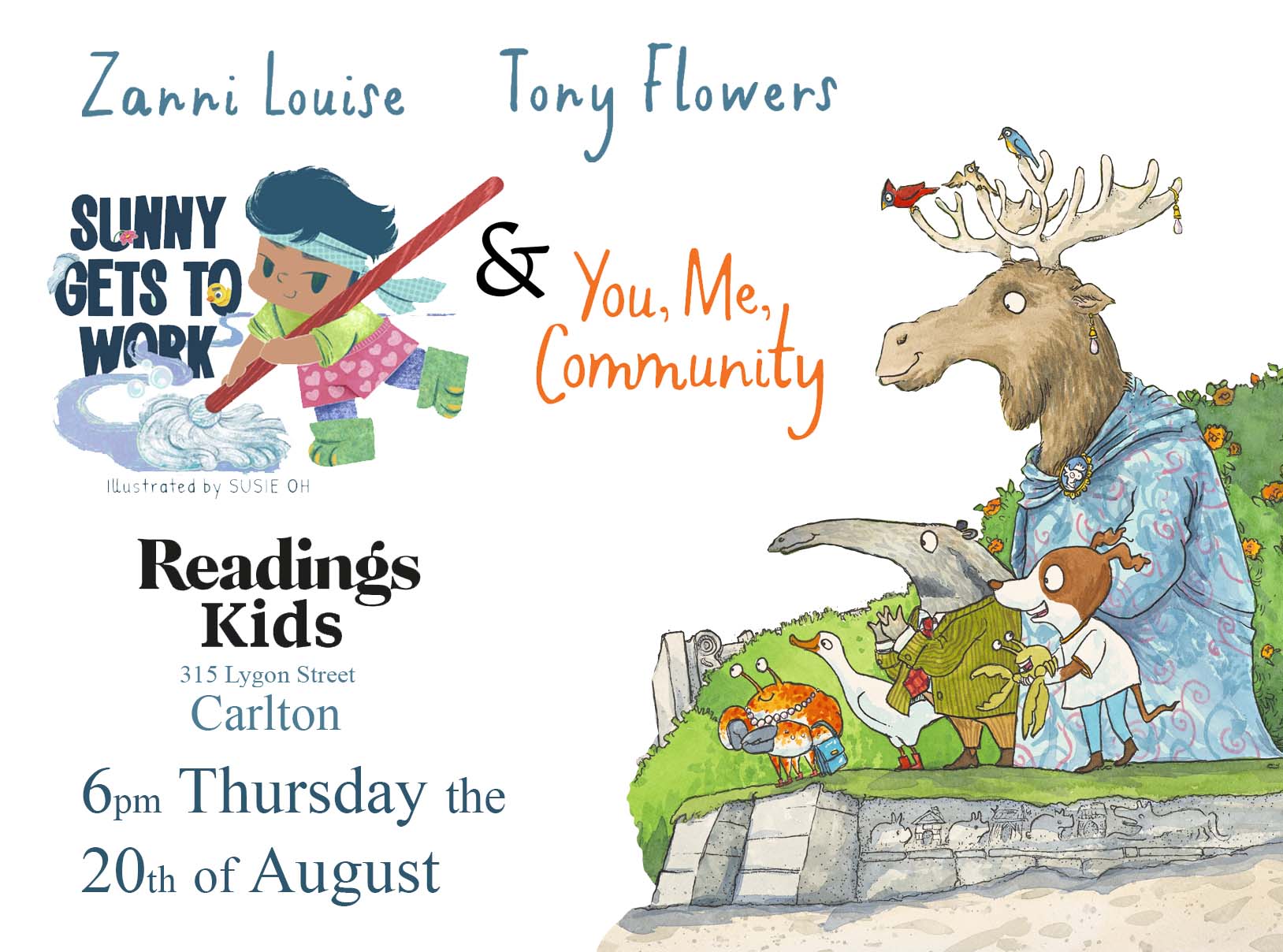
Join us in Melbourne on 20 August for the launch of You, Me, Community at Readings Kids, Carlton, starting at 6pm. Please book with Readings Kids so they can plan for numbers. This will be the only event this year where both Zanni Louise and I will be appearing together, making it the best opportunity to have your book signed by both of us. And, as always, when I sign a copy, I’ll include a simple original drawing inside. We’d love to celebrate the book with you and hope to see you there.
Book Here:
https://www.trybooking.com/events/landing/1567762
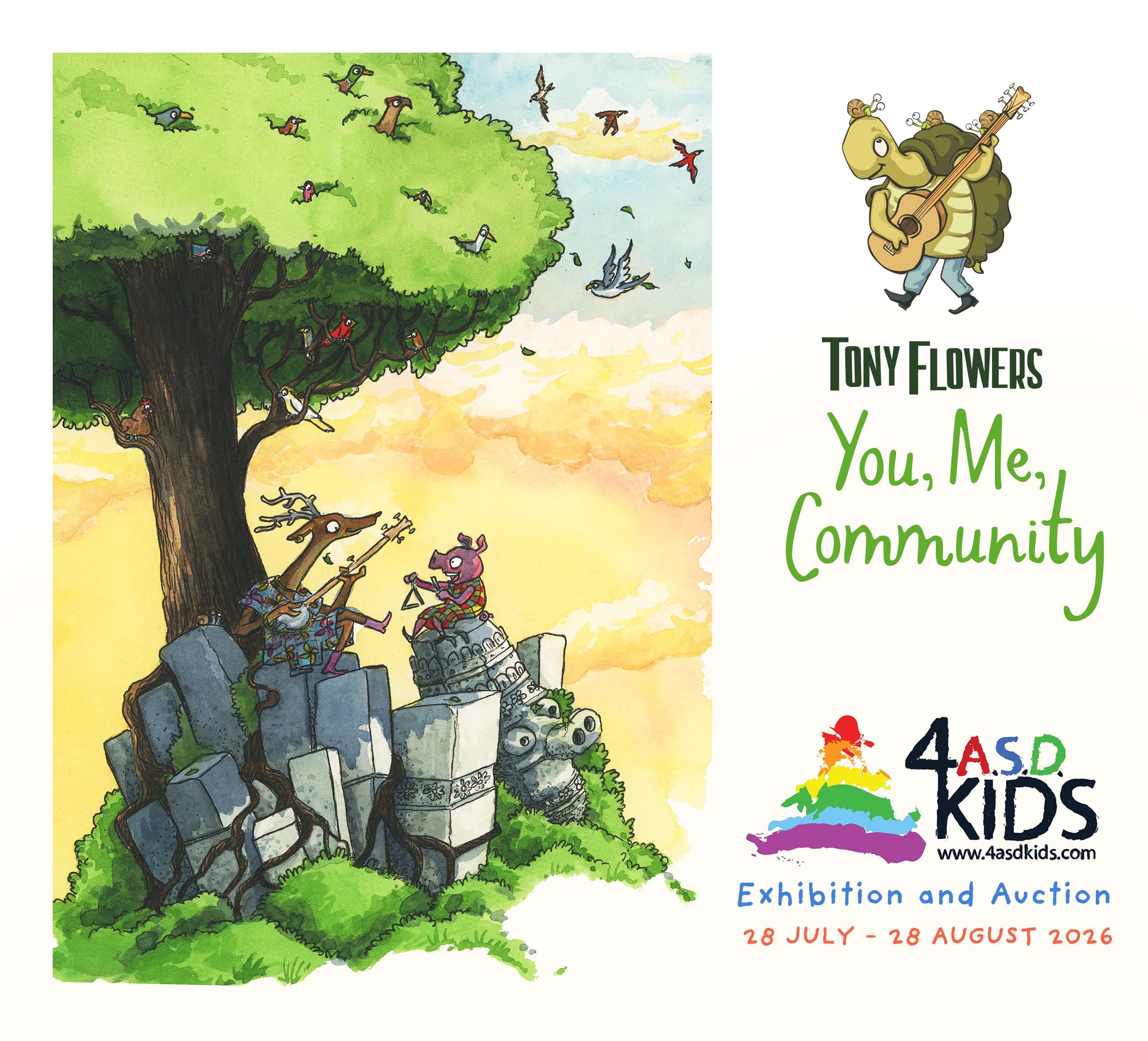
This is you chance to own an original illustration and support a great cause. The above illustration is list as Lot 13, link below.


Leave a Reply