Visual storytelling, writing, and composition
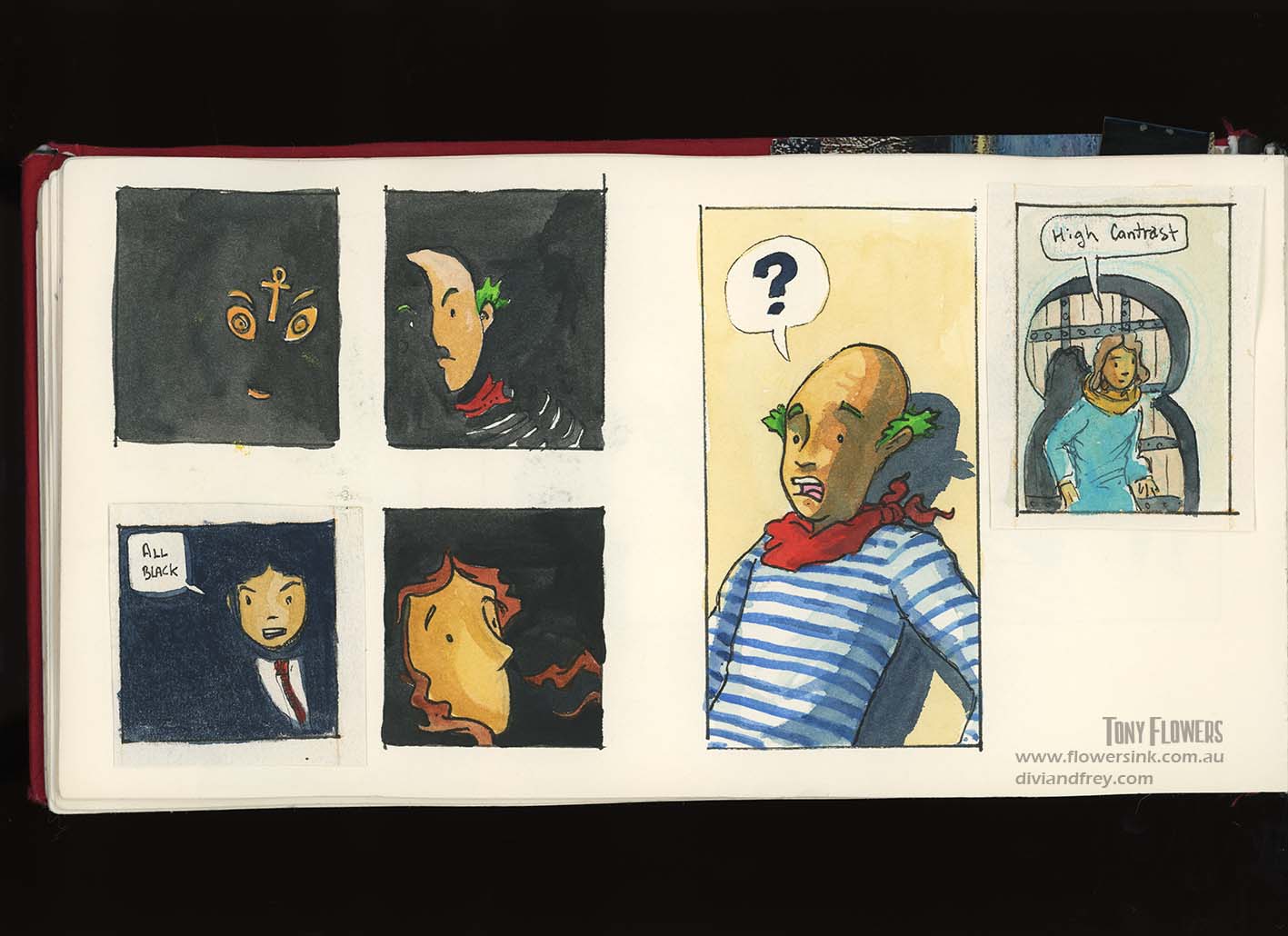
Tony Flowers (2025) Sketchbook
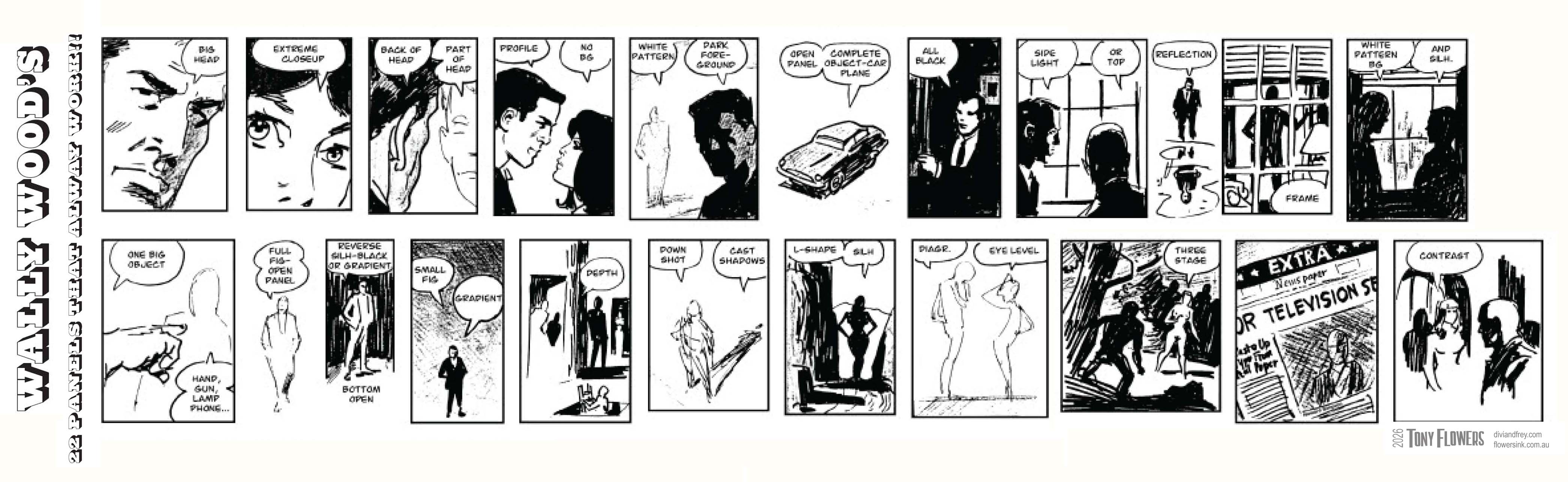
Further to my earlier post on Wally Wood’s 22 Panels That Always Work, I wanted to explore how this system functions as a practical visual shorthand for storytelling. While originally created as a professional tool, the panels translate extremely well into classroom contexts because they help students clearly see how stories are structured, paced, and emotionally shaped through visual choices. [cloudfour.com], [scribblejerk.com]
Below I have put together 2 exercises for Upper Primary school (grades 5 to 6) and 2 for Upper High School (9 to 10). If you do give these activities a go I would love to hear about the results.
Activities for Ages 10–12 (Upper Primary / Years 5–6)
Activity 1: One Moment, Three Panels
Focus: Narrative sequencing and viewpoint
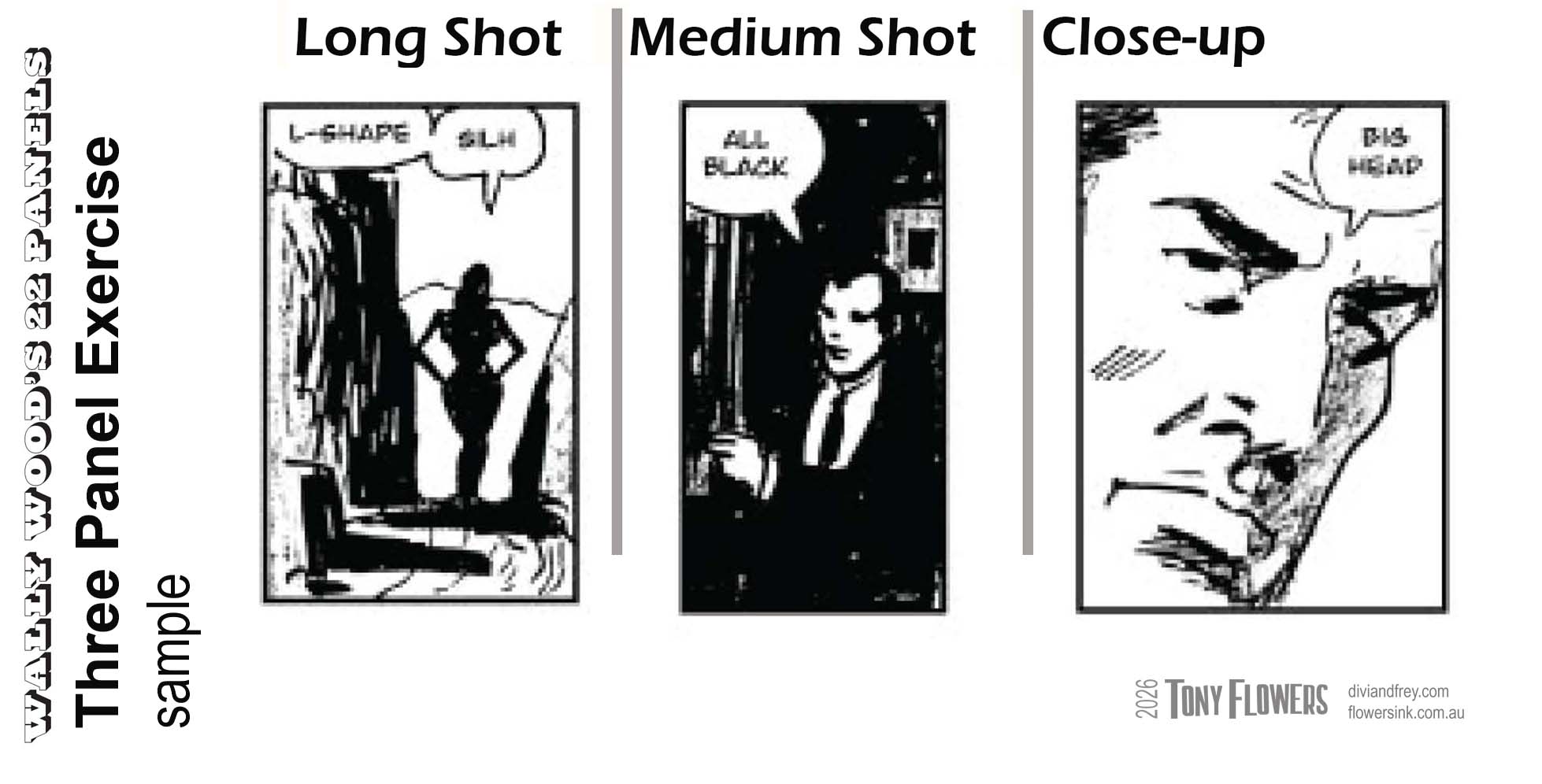
Panels used: Long Shot, Medium Shot, Close‑Up
What students do
- Students are given a simple story moment (e.g. “A character realises they are lost”).
- They must draw the moment three times using:
- One long shot (setting and place)
- One medium shot (action)
- One close‑up (emotion)
- Students label each panel with a sentence explaining what the viewer learns.
Why it works
- Reinforces that stories are told through choice of viewpoint
- Helps students link setting, action, and emotion
- Builds confidence in both visual and written storytelling
Activity 2: The Panel Swap
Focus: Cause and effect in storytelling
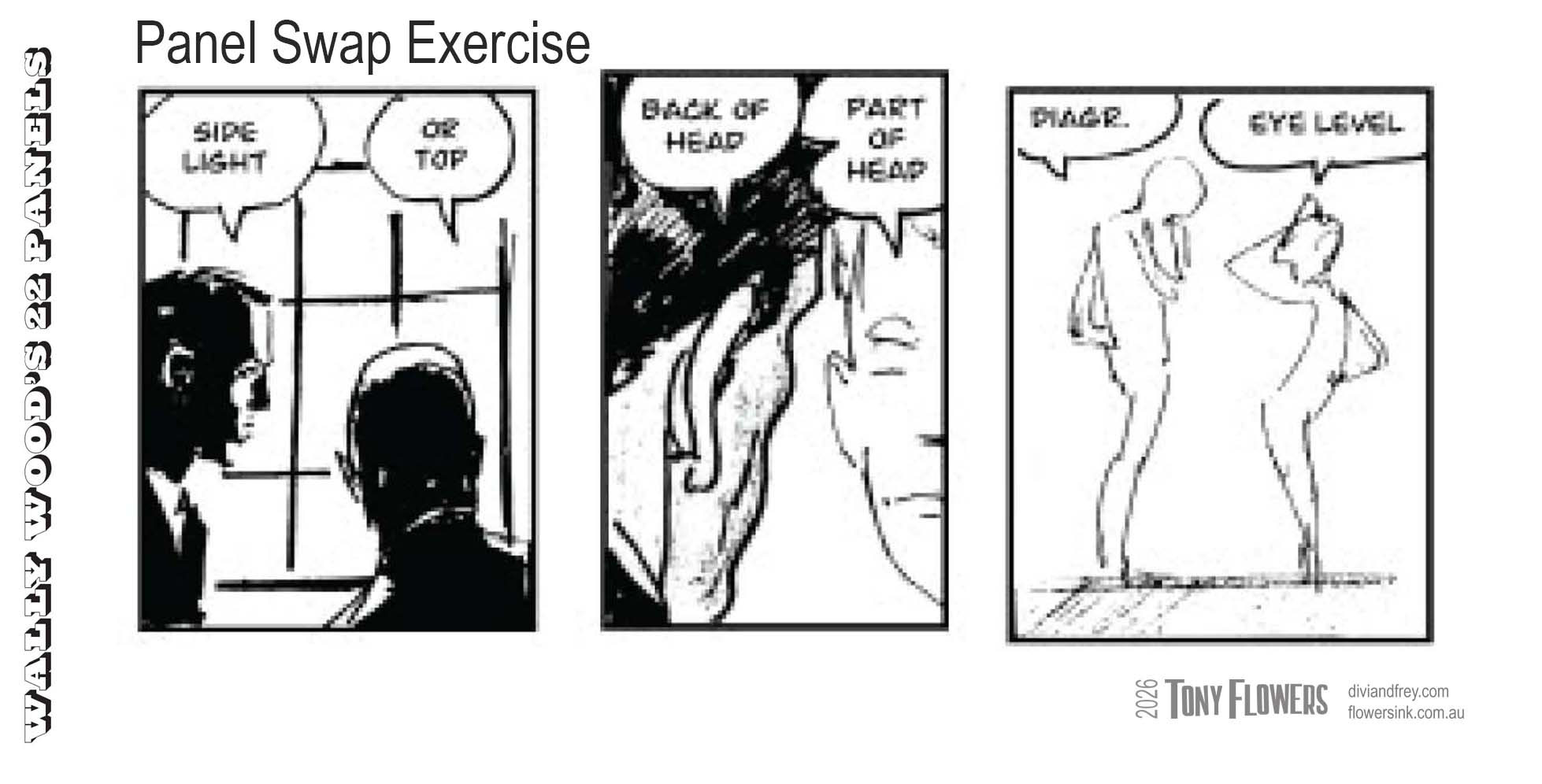
Panels used: Side light + or Top, Over‑the‑Shoulder, Diagr + Eye level
[Diagr= Diagram. Diagram/eye-level, This scene should feels like you could walk over and join them.]
What students do
- Write a short dialogue between two characters. Each character may speak only once. Keep each sentence short and clear.
- They choose one panel type (above) to illustrate it.
- They then swap that panel for a different panel (above) and discuss:
- How the meaning changes
- What feels more dramatic or clear
- Students rewrite one sentence of the paragraph to match the new panel choice.
Why it works
- Shows students that structure affects meaning
- Encourages revision, not just first drafts
- Supports visual literacy alongside writing
Activities for Ages 14–16 (Lower Secondary / Years 9–10)
Activity 3: Visual Subtext Challenge
Focus: Theme, subtext, and interpretation
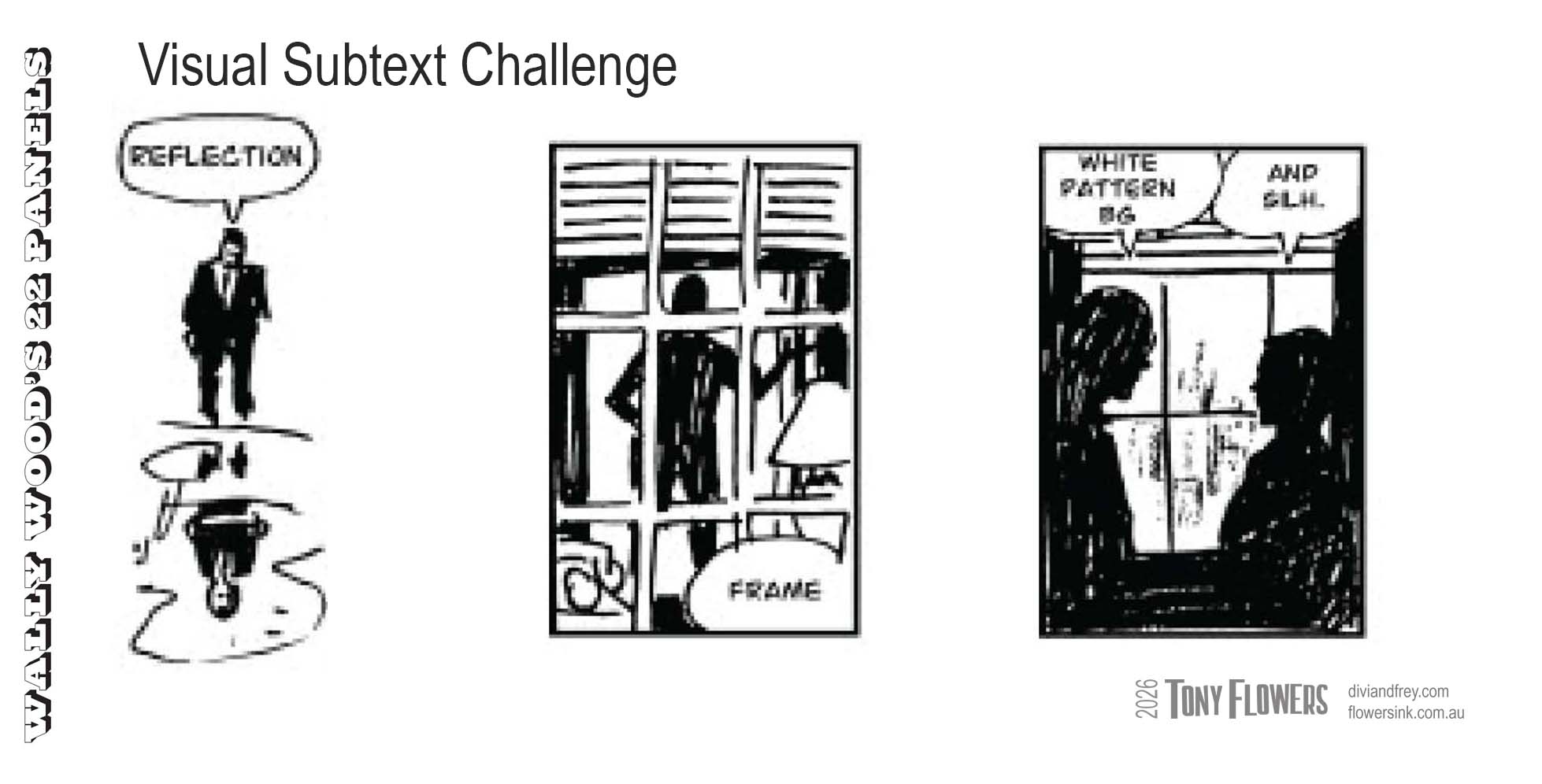
Panels used: Reflection, Frame, Silhouette
What students do
- Students choose a theme (e.g. isolation, power, fear).
- They design a single panel using one of Wood’s compositions (above) to suggest the theme without text.
- Students write a short reflection explaining how framing and composition communicate meaning.
Why it works
- Moves students beyond literal storytelling
- Introduces visual metaphor and abstraction
- Strong crossover with analytical writing
Activity 4: Adapt the Scene
Focus: Multimodal adaptation and narrative structure
Panels used: Any 3–5 panels from the 22
What students do
- Students take a scene from a novel, short story, or film studied in class.
- They adapt it into a short comic sequence using Wood’s panels (3–5 panels from above) as constraints.
- Students justify their panel choices in written annotations.
Why it works
- Develops critical thinking and text transformation
- Reinforces understanding of narrative beats
- Encourages purposeful design decisions
Curriculum Cross‑Over: Australian Curriculum (English)
Key Areas of Alignment
Years 5–6
These activities support:
- Creating written and multimodal texts
- Understanding how text structures and visual features shape meaning
- Explaining how characters, settings, and events are developed
[app.educat…nsw.gov.au], [qcaa.qld.edu.au]
Students are explicitly required to view, create, and explain multimodal texts, which includes visual storytelling and comics.
Years 9–10
For older students, the activities align with:
- Analysing and evaluating representations of people, places, and ideas
- Experimenting with text structures and multimodal features
- Creating sophisticated written and visual responses for different audiences
[australian…lum.edu.au], [qcaa.qld.edu.au]
Using Wally Wood’s panels supports deeper discussions about authorial intent, audience positioning, and interpretation.
Shared Cross‑Curriculum Strengths
Across both age groups, these activities develop:
- Visual literacy and multimodal composition
- Narrative sequencing and cohesion
- Critical and creative thinking
- Clear links between English, Media Arts, and Visual Arts
[v8.austral…lum.edu.au], [acara.edu.au]
Why Wally Wood Works So Well in Education
The power of the 22 Panels is that they remove the fear of “what do I draw?” and replace it with purposeful choices. For students, this mirrors the writing process, planning, drafting, revising, and refining meaning.
They are not just drawing pictures.
They are learning how stories work.
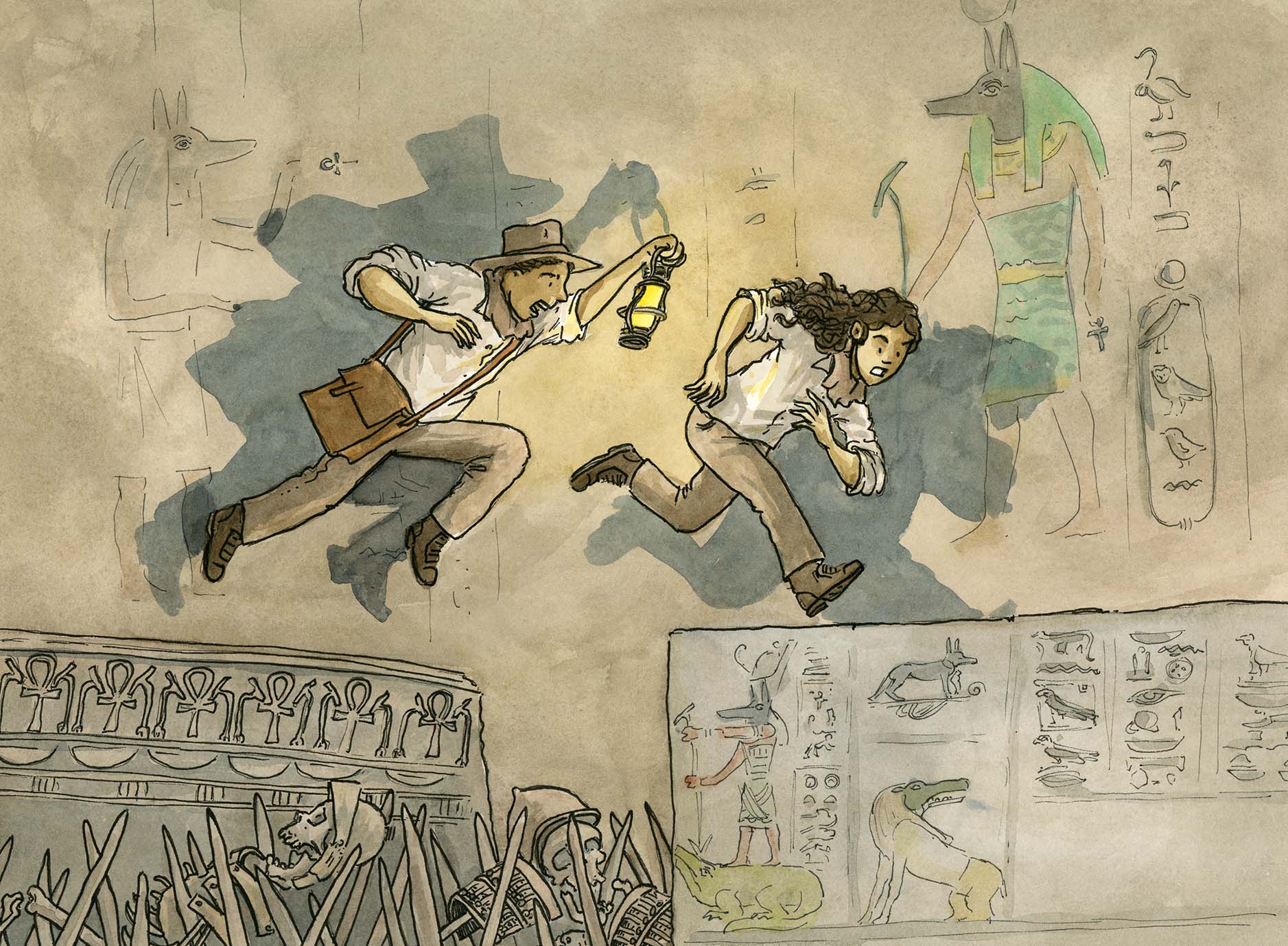
Tony Flowers (2025) Divi and Frey, book 1
Image uses the principles of Diagram/eye-level (combined with contrast to build data)
 Divi & Frey
Leave a comment